
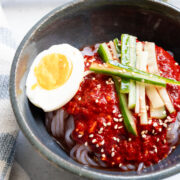
Enjoy Korean spicy cold noodles (naengmyeon) but with one ingredient change that makes this delicious and easy dish low carb and enjoyable by everyone.
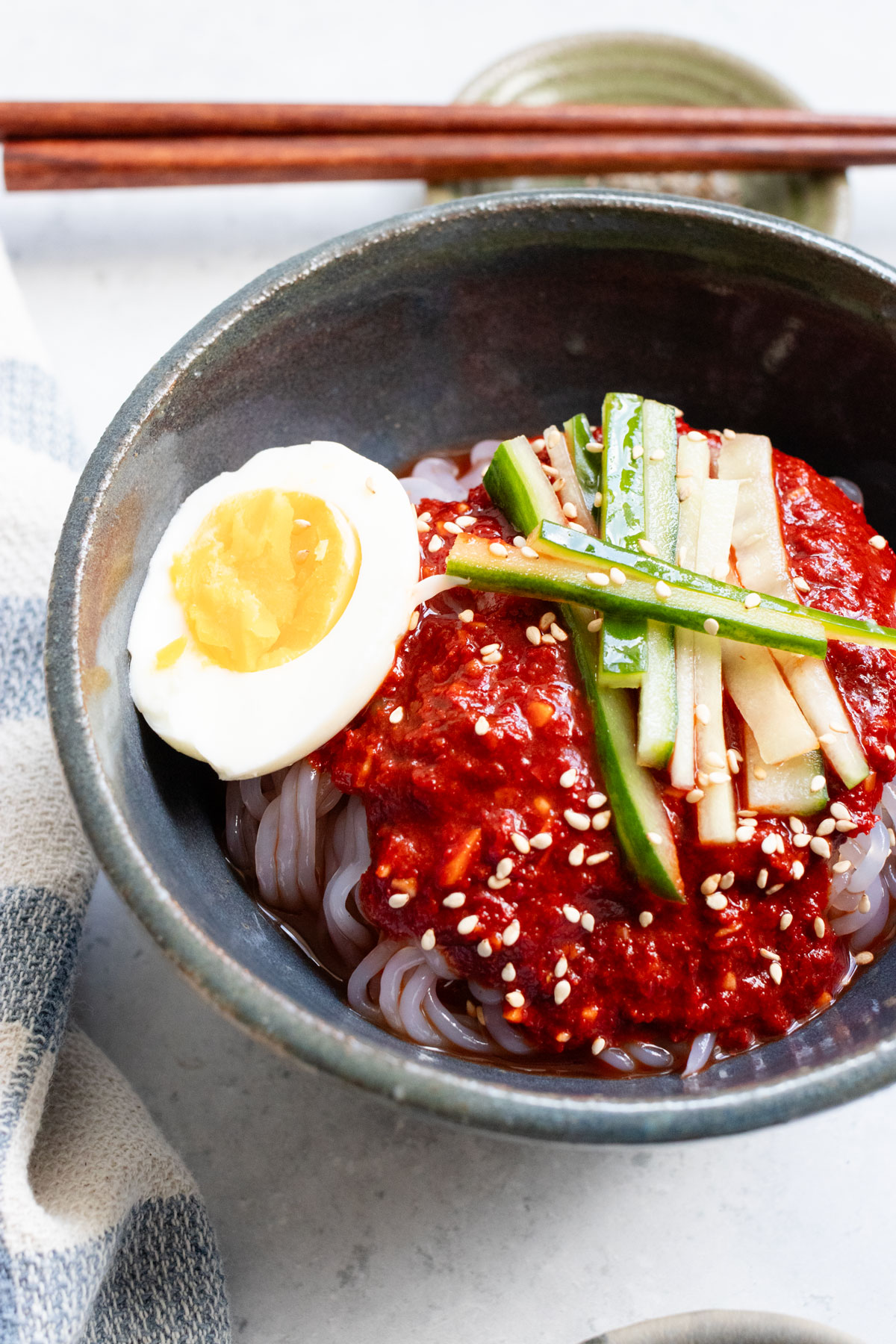
Korean spicy cold noodles is the epitome of a delicious and easy meal that leaves you feeling satisfied. The cold chewy buckwheat noodles mixed with a mildly spicy gochujang-based sauce and freshly julienned cucumbers is satisfyingly refreshing. This recipe can be made in under 5 minutes and will probably only take 5 minutes to consume.
Typically, Korean spicy cold noodles are made with thin buckwheat noodles, which gives it the signature chewy texture. However, to make this recipe accessible to those who may need to stick to low carb diets, replace the buckwheat noodles with konjac noodles.
Jump to:
Ingredients
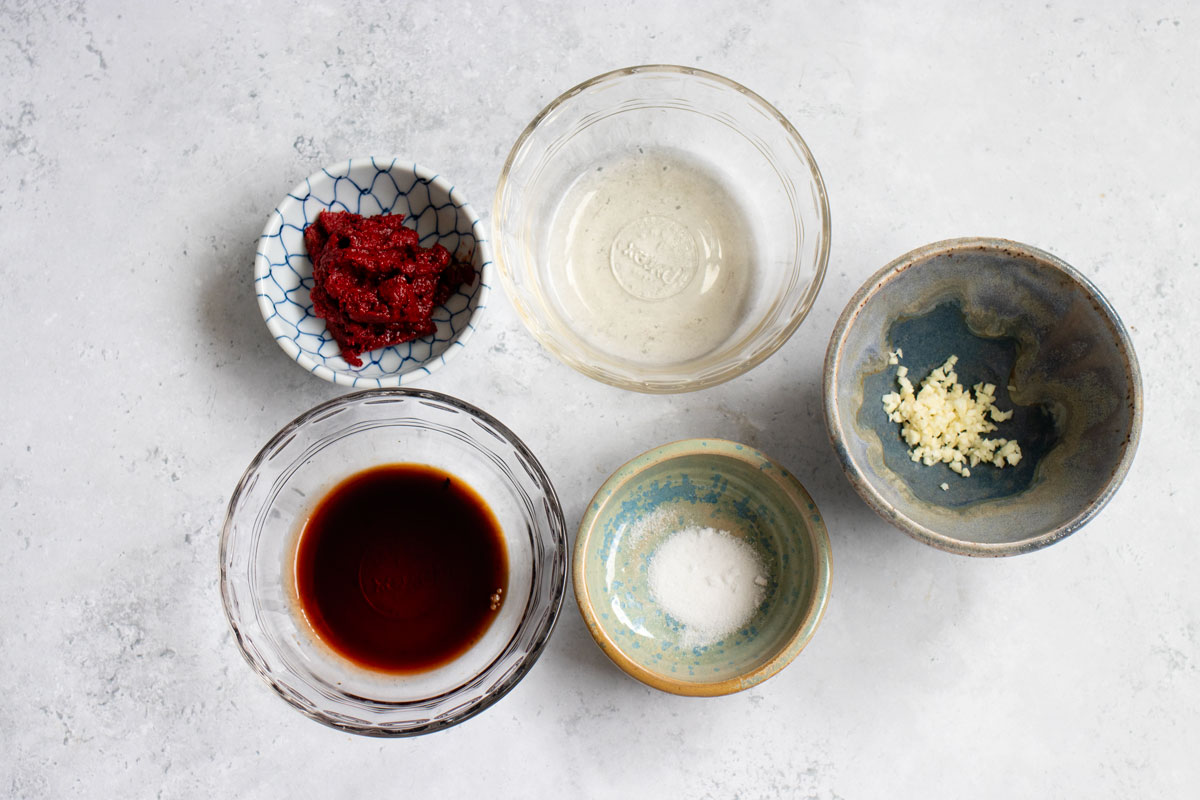
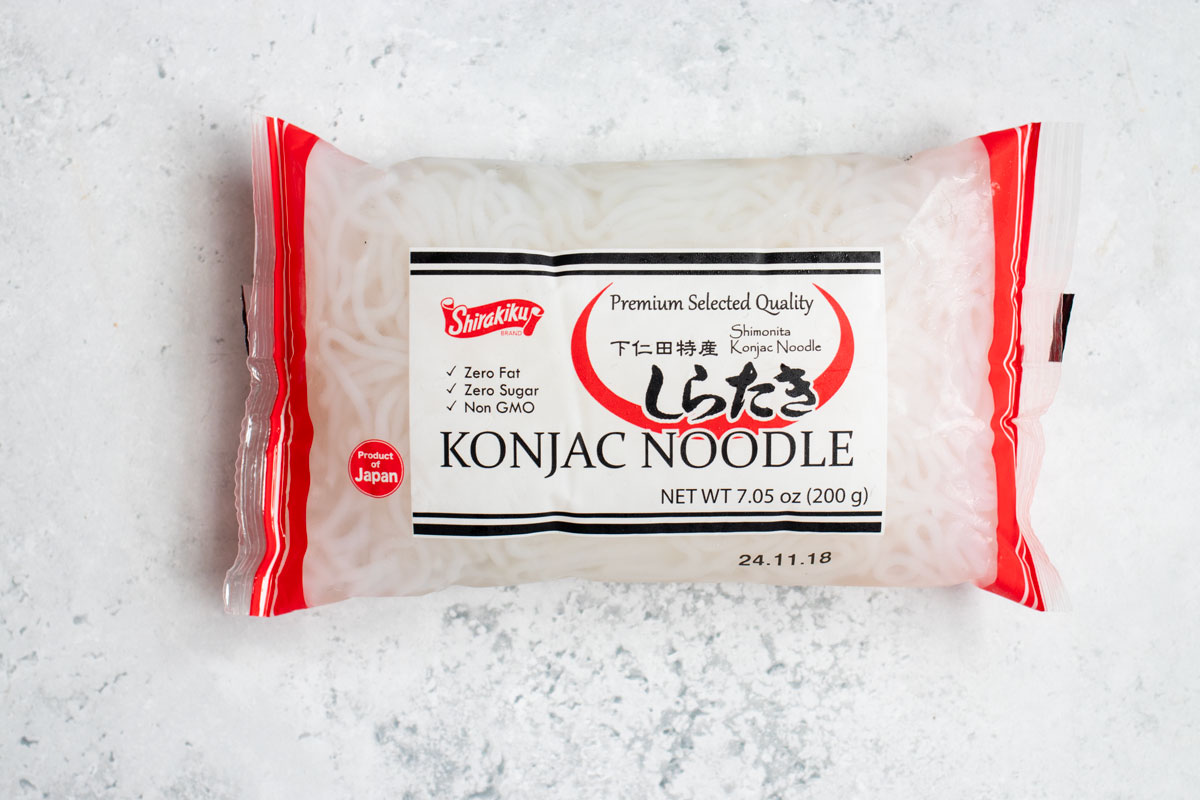
- Konjac noodles: Konjac noodles are gelatinous noodles made from the konjac yam. They are low in carbohydrates which make them the perfect substitute for those who are on low carb diets.
- Gochujang: Gochujang is a Korean fermented chili paste made from red chili powder, glutinous rice, fermented soybeans, and salt. This complex spicy-sweet-savory paste is commonly used as a condiment or as a base for sauces and marinades in Korean cuisine. You'll see gochujang used in several of my Korean recipes such as Spicy Gochujang Rigatoni, Kimchi Mushroom Soft Tofu Stew (Vegetarian), or Korean Fried Chicken
- Rice vinegar
- Light soy sauce
- Sugar
- Minced garlic
- Boiled egg
- Julienned cucumbers
- Toasted white sesame seeds: An optional but great garnishment for your noodles.
See recipe card for quantities.
What are konjac noodles?
Instructions
- Drain and rinse your konjac noodles under cold running water in a colander. Don't skip this step. Konjac noodles have a natural briny smell straight from the package, which is completely normal and rinses off easily. Let them drain for a few minutes and pat dry with a paper towel to remove as much moisture as possible. The drier the noodles, the better the sauce will cling.
- While the noodles drain, make the sauce. In a bowl, whisk together the gochujang, rice vinegar, light soy sauce, sugar, and minced garlic until smooth and fully combined. Taste as you go. The sauce should be tangy, lightly sweet, savory, and gently spicy.
- Add the drained konjac noodles to the bowl with the sauce. Toss well until every strand is fully coated.
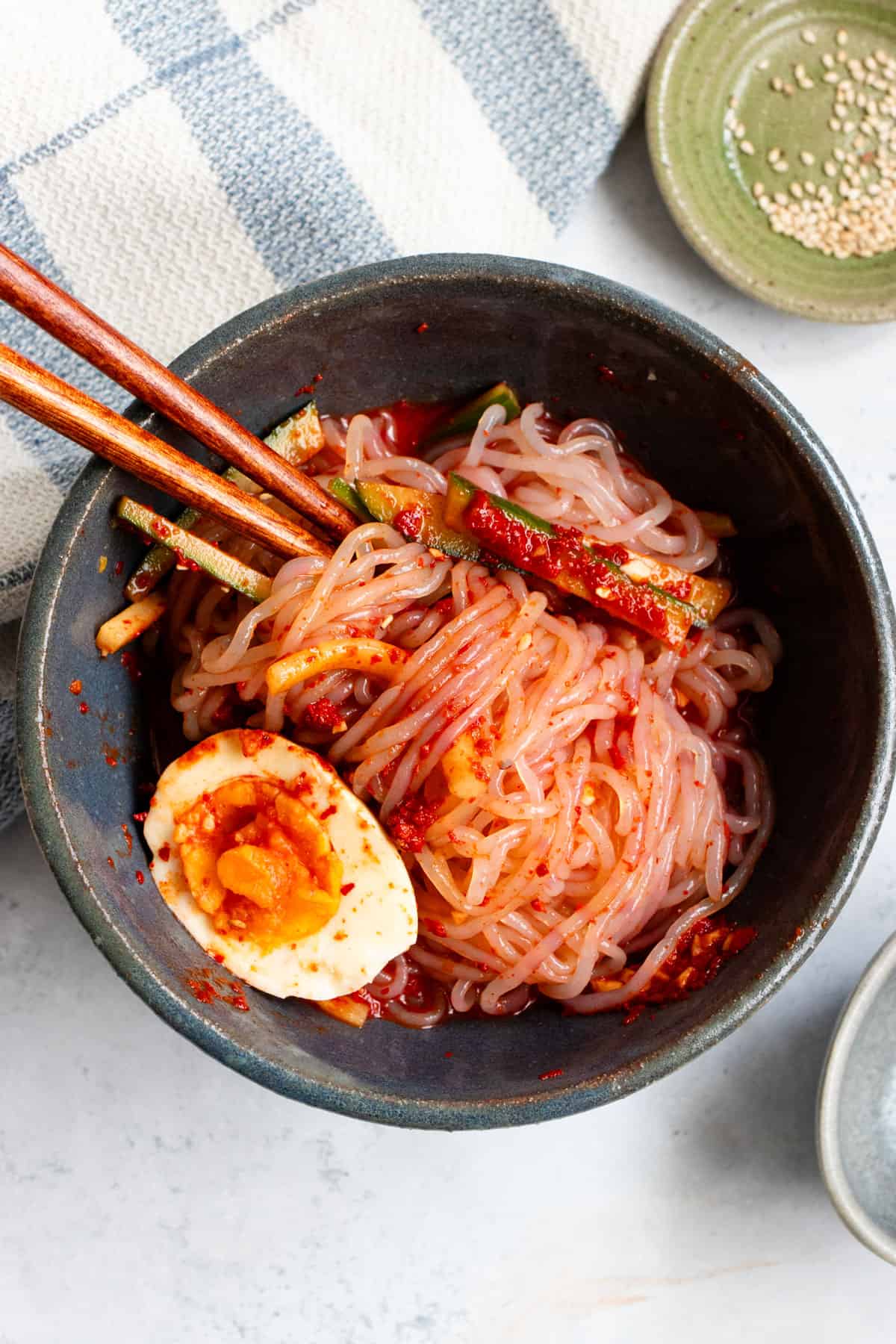
- Transfer to a serving bowl. Top with julienned cucumber and a halved boiled egg. Finish with a sprinkle of toasted sesame seeds if using. Serve immediately.
Substitutions
Konjac noodles: use thin buckwheat noodles (soba) if you're not following a low-carb diet, for the traditional chewy texture
Gochujang: a mix of miso paste and a pinch of chili flakes works in a pinch, though the flavor will differ
Rice vinegar: apple cider vinegar works as a 1:1 swap
Sugar: honey or a low-glycemic sweetener like monk fruit for a cleaner version Light soy sauce: tamari for a gluten-free version
Storage
Once mixed, this dish is best eaten right away. Konjac noodles will continue to absorb the sauce and the cucumbers will release water over time, making leftovers watery. If you want to meal prep, keep the noodles, sauce, and toppings separate in airtight containers and toss together just before eating. The sauce keeps well in the fridge for up to 2 days.
Top tip
The single most important step is getting your konjac noodles as dry as possible before saucing them. Konjac noodles hold a lot of water and will dilute your sauce if not properly drained. After rinsing, let them sit in the colander for at least 2 to 3 minutes, then give them a gentle press with a clean paper towel before tossing.
FAQ
Most Asian grocery stores carry them, often labeled as "shirataki noodles" or "miracle noodles." They're also widely available online and increasingly stocked in the health food section of larger supermarkets. I've seen them at Costco, too!
They're surprisingly satisfying thanks to their chewy texture and the fact that konjac is high in glucomannan, a soluble fiber that expands in the stomach. Pair with the boiled egg for added protein to make it a complete meal.
Yes, both work. Tubs tend to be slightly more concentrated, so start with a little less and adjust to taste.
Gochujang traditionally contains glutinous rice, not wheat, but some brands do add wheat. Check the label if you're strictly gluten-free, and swap in tamari for the soy sauce.
Related
Looking for other recipes like this? Try these:
📖 Recipe
Low Carb Korean Spicy Noodles
Ingredients
- 200 g konjac noodles
- 1 tablespoon gochujang
- 1 tablespoon rice vinegar
- 1 teaspoon light soy sauce
- 1 teaspoon sugar
- 1 clove garlic minced
- ¼ cucumber julienned
- 1 boiled egg halved
- 1 teaspoon toasted white sesame seeds optional
Instructions
- Drain and rinse the konjac noodles under cold water. Pat dry with a paper towel to remove as much moisture as possible.
- Whisk together the gochujang, rice vinegar, soy sauce, sugar, and minced garlic in a bowl. Add the noodles and toss until fully coated.
- Transfer to a serving bowl and top with julienned cucumber, halved boiled egg, and sesame seeds. Serve immediately.
Julia says
Love konjac noodles, I've been looking for ways to spice these up.
Jill says
Wow!! So excited I've been waiting for you to post another recipe for the last year and a half!!! I definitely need low carb since summer is coming up!